






A standard homeowners policy is four coverages stapled to one deductible: the dwelling and attached structures, the belongings inside, your liability if someone is hurt on the property, and loss of use if the home becomes uninhabitable after a covered loss. Almost every confusion in homeowners insurance comes from people assuming one of those four does something it doesn't — cover a flood, pay for a roof that wore out, or pay to fix a crack that was there before the policy started. The federal government does not require you to carry homeowners insurance at all; mortgage lenders commonly do as a condition of the loan, which is a different thing entirely.
What a standard policy actually pays for
The NAIC's consumer guidance breaks dwelling coverage into the house itself and the structures attached to it, including fixtures such as plumbing, electrical wiring, heating, and permanently installed air-conditioning systems. That last clause matters more than most people realize. A burst pipe that soaks drywall and ruins the furnace is a dwelling claim; the plumber's bill to fix the corroded pipe that caused it usually is not.
Personal property coverage handles what's inside — furniture, clothing, electronics — subject to policy limits and exclusions. Those limits are where claims go sideways. A standard policy sets sub-limits for categories like jewelry, silverware, firearms, and cash, so a stolen engagement ring may pay out at a fraction of its appraisal even though you insured the whole house for a large number. Scheduling valuables separately is the fix, and it costs extra.
Liability coverage protects you if someone is injured on your property or you accidentally damage someone else's property. It also pays for your legal defense, which is the part people underestimate: the defense costs can exceed the settlement. Loss of use pays additional living expenses — a hotel, rent, restaurant meals above your normal grocery spend — if a covered loss makes the home uninhabitable. Keep every receipt during a displacement; most carriers reimburse actual documented costs, not a flat per-diem.
The honest trade-off is that a standard policy is deliberately narrow. It is built around named perils and exclusions, and the exclusions are where the money goes. Buy the cheapest version of it and you'll have bought a policy that responds to a kitchen fire and not much else.
Flood, roof leaks, and foundation cracks: the three claims people assume are covered
Flood damage is typically excluded from standard homeowners insurance and generally requires separate flood insurance. The NAIC separates homeowners coverage from flood protection for exactly this reason. It does not matter that the water came from a storm that also tore off shingles — if the loss mechanism is rising water, the homeowners carrier will point at the water-damage exclusion and the flood policy will handle it, and if you didn't buy one, nobody does. This is the single most expensive misunderstanding in the category, and it is not close.
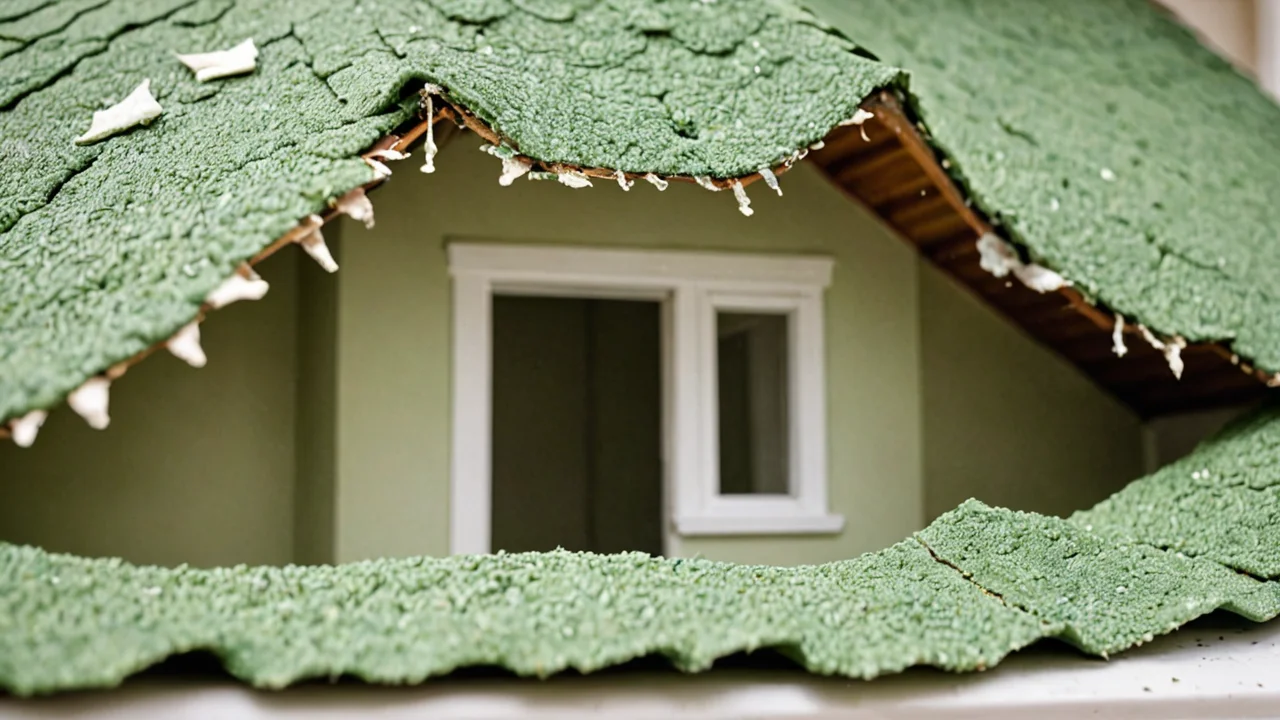
Roof leaks are more nuanced. Standard policies generally cover sudden and accidental water damage, but maintenance issues, wear and tear, and certain seepage or deterioration losses are commonly excluded or limited. In practice that means an ice dam that backs water under the shingles in a single storm is a claim; a roof that has been leaking slowly into the attic ceiling for two winters and shows rot and mold is a maintenance denial. The adjuster looks at the pattern — staining spread across seasons, soft decking, multiple layers of patched shingles — and that pattern tells the story before you finish talking. Roof age and condition get scrutinized at underwriting too, and a roof past its service life can drive a non-renewal rather than a denial.
Foundation damage is often not broadly covered when it results from settlement, earth movement, or other excluded causes. NAIC materials tie coverage to insured perils and exclusions, so whether a crack is paid depends on the policy wording and on what caused it. A foundation crack from a sudden plumbing failure inside the slab is a very different claim from a crack from soil settling over a decade. Earth movement — settlement, subsidence, sinkholes in most forms — is usually excluded or separately endorsed. Get a structural engineer's report before you file, because once you've described the cause to the carrier in writing, you've set the terms of the claim.
What you choose, and in what order
Pick your dwelling limit first, and pick it based on replacement cost, not market value or your mortgage balance. Those three numbers are unrelated, and using the wrong one is how people end up underinsured. Rebuilding cost per square foot, local labor rates, and current material prices drive the number; land value and what the house would sell for do not.
Then set the deductible, which is the real cost decision on the page. A higher deductible lowers the premium, but it also converts small claims into self-funded repairs, and small claims are the ones most likely to get a policy non-renewed. Filing two modest claims in a few years is a common path to losing the policy at renewal, and in some regions that is happening more often than it used to.
Then decide on endorsements, in rough order of how often they pay for themselves:
- Replacement cost on contents rather than actual cash value, which depreciates your belongings before paying.
- Water backup and sump overflow, which covers sewage backing into a basement — a separate exclusion from flood and cheap relative to the damage.
- Extended replacement cost on the dwelling, which pays a percentage above the limit if rebuilding costs spike after a regional catastrophe. After a widespread event, contractors and materials get scarce and expensive fast.
- Scheduled personal property for jewelry, art, instruments, and anything with a sub-limit.
- Ordinance or law coverage, which pays the extra cost of rebuilding to current code. An older home brought up to code after a fire can cost substantially more than a like-for-like rebuild, and the base policy won't pay that gap.
Then, separately, price flood. It's a different policy from a different program or carrier and it is not bundled automatically. The trade-off is real — flood coverage in a mapped high-risk zone can cost more than the homeowners policy itself — but skipping it in a moderate-risk zone is a bet that the map is right about your specific street, and the map is drawn at a scale that doesn't know your street.
What it costs, and why the number keeps moving
Homeowners premiums vary enormously by region. Average homeowners insurance premium per policy was $1,396 in the Northeast, $1,476 in the Midwest, $1,818 in the Southeast, and $1,600 in the Western region as of 2024. The Southeast figure reflects hurricane and convective-storm exposure; the Western figure reflects wildfire and reconstruction costs.
The direction of travel matters as much as the level. Inflation-adjusted average premium growth in the Western region since 2018 was 43.3% as of 2024, and company-initiated homeowners non-renewals per 1,000 policies in force grew 216% in the Western Zone since 2018 — against 96% growth in the Southeast over the same period. Read those two numbers together: carriers are not just repricing, they are exiting. A non-renewal notice is the mechanism by which an insurer leaves a wildfire-exposed or storm-exposed book, and it arrives whether or not you've ever filed a claim.
What that means practically is that shopping the policy every couple of years is no longer optional in exposed regions, and that the cheapest quote is often the carrier most likely to withdraw. A slightly higher premium from a carrier with a longer history in the state is a form of insurance on your insurance. The cost of that approach is straightforward: you pay more now for continuity you may never need.
The tax question, settled
Homeowners insurance on a personal residence is generally not tax deductible. IRS Publication 530 treats it as a non-deductible personal expense, with limited exceptions for business use such as a home office or rental activity. If you run a business from a dedicated portion of the home or rent part of it out, the allocable share of the premium can be treated as a business expense — that's the exception, and it's narrow. The portion of the home used personally stays non-deductible.
Don't confuse the premium with the other housing costs that do show up on a return. Mortgage interest and property taxes are the deductible items for many owners, and the state and local tax deduction is capped: federal tax law limits the state and local tax deduction that can affect homeowners to $10,000 as of 2026. Insurance premiums sit outside that cap because they were never deductible in the first place. If you itemize, your property tax line may hit the cap while your insurance line does nothing at all.
The practical consequence: don't buy a bigger policy, a lower deductible, or extra endorsements on the theory that the premium is deductible. It isn't. Choose coverage on what it would cost you to rebuild and refurnish, and treat the tax treatment as irrelevant to the decision. The one place to check is a genuine business-use allocation, and that's a question for a tax professional who can look at your actual square footage and filing status.
Where coverage basics go wrong in practice
Most claim disasters trace back to a gap between what the owner thought they bought and what the declarations page says. The declarations page is the first page of the policy, and it lists the dwelling limit, the deductible, the personal property limit, and every endorsement by name. Read it once a year. If the dwelling limit hasn't moved since you bought the house, you're probably underinsured, because construction costs have moved even when your mortgage hasn't.
Keep a current home inventory with photos or video, stored somewhere other than the house. After a total loss, the burden of proving what you owned falls on you, and memory under stress is a poor substitute — policyholders routinely forget entire categories of belongings when filing. Walking through each room on video, opening closets and narrating, takes an afternoon and is the difference between a full contents settlement and a partial one.
Report changes that affect risk: a new roof, a pool, a wood stove, a basement finish, a dog of a breed the carrier asks about, a home business with visitors. Underwriting gaps get discovered at claim time, and a material misrepresentation on an application is grounds for rescission in most states — meaning the carrier can void the policy and refund your premium instead of paying the claim. That's the worst outcome available and it happens more than people expect, usually over something the owner didn't think was worth mentioning.
Finally, understand the claims math before you call. The deductible comes off the top, depreciation may come off the contents and roof until you document replacement, and the claim goes on your loss history whether or not it pays. A loss barely above the deductible is often better handled out of pocket — not because the policy won't respond, but because the renewal pricing and eligibility consequences outlast the check. The trade-off cuts the other way for anything large or anything involving liability, where the carrier's duty to defend you is worth far more than the repair cost.
Why insurers ask about roof age before they ask about anything else
Roof age is an underwriting question, not just a claims question, and it can decide whether you get a policy at all. Carriers inspect or estimate roof condition at new business and again at renewal, and a roof past its expected service life in a hail or wind zone is a common reason for a declined application or a non-renewal — the same non-renewal mechanism driving the numbers reported in the Western Zone. You'll notice it as a letter asking for an inspection, an actual cash value settlement on the roof instead of replacement cost, or a renewal offer with a higher wind or hurricane deductible attached.
The practical response is documentation. A contractor's invoice showing a full tear-off and new decking resets the clock with most carriers, and sending it unprompted beats arguing after a denial. Cosmetic damage exclusions and separate wind/hail deductibles are the trade-off here: a percentage deductible lowers the premium but means a modest hail claim pays nothing, so read the deductible section as carefully as the coverage section.
What "replacement cost" means once depreciation is applied
Replacement cost on the dwelling and actual cash value on the contents are two different settlement methods, and the gap between them is where contents claims shrink. Actual cash value pays depreciated value — an aged sofa or an old television pays out well under what a new one costs — while replacement cost reimburses the cost to buy new, often after you've replaced the item and submitted the receipt. Many policies let you recover the withheld depreciation later, but only if you ask and only within the policy's time limit.
The same distinction shows up on roofs and older structures, where carriers may apply functional replacement cost or a modified settlement. The declarations page and the loss settlement clause tell you which method applies to which part of the property, and they are worth reading before a loss rather than after.